
A company’s organizational design says more about its culture than any mission statement.
Have you ever felt stuck in your role waiting endlessly for a promotion or clear next step that never came?
That feeling often has less to do with your skills and more to do with how your company designed its organizational structure.
A well-crafted structure is not just reporting lines on a chart. It’s a signal of organizational health: fairness, transparency and real opportunities for growth.
Let’s break down what makes a structure empowering rather than frustrating.
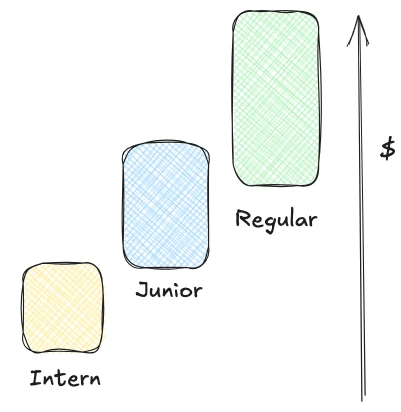
Frequent promotions at early stages
Early in a career, growth should feel fast and visible. Interns, juniors and entry-level employees want to see progress every year, not every three years.
That’s why lower levels should be designed as short stages.
- An intern shouldn’t remain in that role for more than a year.
- A junior should expect a promotion within a year or two.
Narrow, well-defined steps create momentum and keep early-career employees motivated to continue developing.
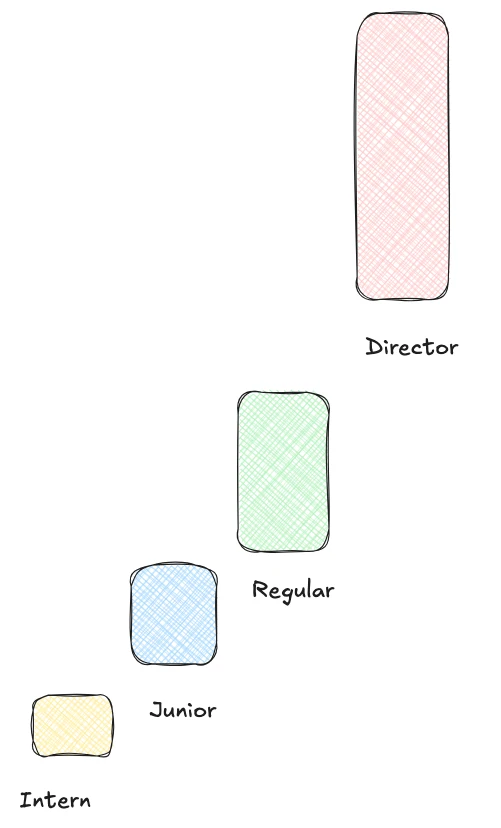
Broader levels at senior stages
As careers progress, expectations change. Senior, Lead or Director roles require broader experience, longer tenure and more complex responsibilities.
That’s why these levels should be much wider and less rigidly defined.
- Responsibilities are broader and less predictable.
- Work is more strategic than operational.
- Growth happens over years, not months.
This allows seasoned professionals to stay in one role for longer, continue progressing and still feel valued without forcing unnecessary promotions.
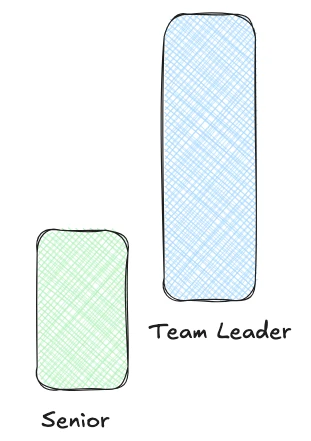
Overlapping levels = flexibility
Another mark of a healthy structure is overlap between levels.
If levels are strictly separated, a dangerous expectation forms: “If I reach the top of my level, I must be promoted.” But promotions aren’t always possible or appropriate.
Overlap solves this:
- A specialist can grow in recognition and compensation without a formal title change.
- The company gains flexibility to reward people fairly.
Imagine a technical expert who is brilliant in a narrow field but not a fit for the broader leadership role above. Overlapping levels allow that person to thrive without being pushed into a position they neither want nor excel at.
Two career tracks: IC vs Manager
Mature organizations establish two equally respected career paths:
- IC (Individual Contributor) — deepening expertise, solving complex problems, driving innovation.
- Managerial (Leadership) — building teams, mentoring, and shaping the organization.
This choice typically appears around the mid-level engineer or lead stage. From there, employees decide:
- Do I want to grow as a technical expert?
- Or do I want to grow by leading people?
Both tracks must be equally valued. Otherwise, brilliant specialists get forced into management roles they don’t wantjust because that’s “the only way up.”
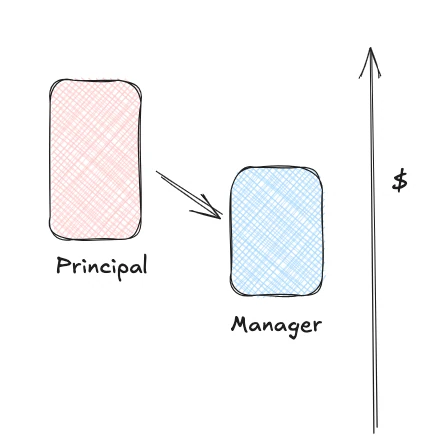
Balancing IC and Manager levels
Here’s a counterintuitive but powerful best practice: The first levels of management should sit below the top levels of the IC track.
Why? Because this prevents people from choosing management just for the title or the money.
If someone moves from Senior IC to a first-time Manager role, they may even take a small pay cut. That way, only those truly motivated to lead people make the leap.
It’s a natural filter: management attracts those with a calling for leadership, not those chasing a bigger paycheck.
The bigger picture
So, what makes a well-designed organizational structure?
- Narrow, frequent steps at junior levels → clear growth and motivation early on.
- Broader levels at senior stages → stability and long-term development.
- Overlapping ranges → flexibility and fairness without forced promotions.
- Two career tracks (IC and Manager) → equal respect for different talents.
- Balanced entry into management → leadership chosen out of passion, not pressure.
In the end, structure is not just hierarchy on an org chart. It is a mirror of your culture. It shows whether your company values fairness, transparency and authentic growth or whether it leaves people stuck and frustrated.
So ask yourself: what does your organizational structure say about your company?